
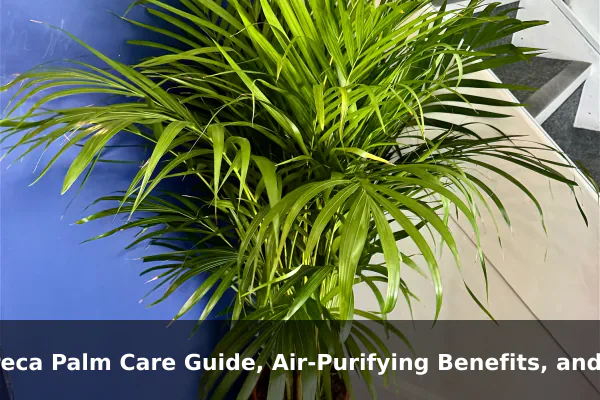
The areca palm is one of the most recognizable indoor palms in the world, prized for its arching, feathery fronds and its ability to bring a soft tropical mood into living rooms, offices, and bright corners. Whether you grew up calling it the yellow butterfly palm, the golden cane palm, or simply the bamboo palm, this plant has earned a lasting place among popular houseplants because it looks lush without demanding a greenhouse setup.
This guide focuses specifically on areca palm — how to grow it indoors, what its reputation as an air-purifying plant actually means, and how to enjoy it as a calming, biophilic design element. The information leans on botanical references such as Kew Science and university extension services, while treating air-quality claims cautiously in line with US EPA guidance. The goal is a practical, honest walk-through so you can keep your areca palm healthy for years.
Because this plant is sometimes confused with other indoor greens or with the chewing-related areca nut palm, we will also clarify identity before moving into care, problems, and safety notes.

What Is the Areca Palm?
The areca palm sold in nurseries and home stores is Chrysalidocarpus lutescens, a name also widely recorded as the synonym Dypsis lutescens. According to Kew Science’s Plants of the World Online, this species is native to Madagascar, where it grows as a clumping, multi-stemmed palm with slender, golden-toned canes and gracefully arching pinnate leaves.
Common Names and Identity
You will see the same plant labeled with several common names, which can be confusing for new owners:
- Areca palm — the most familiar trade name.
- Yellow butterfly palm — used by the University of Florida IFAS Extension because of its yellow-green leaf stems.
- Golden cane palm or bamboo palm — references to its cane-like stems.
It is important to note that this is not the same plant as Areca catechu, the betel-nut palm associated with chewing traditions in parts of Asia. Casual naming overlaps, but the houseplant in your living room is the Madagascar species.
Growth Habit Indoors
Outdoors in tropical climates, a clump can reach several meters tall. Indoors, the North Carolina Extension Gardener Plant Toolbox and IFAS Extension both describe more modest dimensions, typically reaching roof-friendly heights over time when conditions stay bright, warm, and humid. Expect slow but steady growth and a vase-shaped silhouette that fills a corner without crowding it.
Areca Palm Meaning and Home Benefits
In plant-symbolism circles, the areca palm is often linked with calm, prosperity, and tropical hospitality. Its feathery canopy and upright posture suggest abundance and gentle energy, which is why it appears so often in spa interiors, hotel lobbies, and meditation rooms. While these are cultural and decorative associations rather than scientific facts, they explain part of the plant’s enduring popularity.
Decorative and Biophilic Value
- Soft visual screening: Multiple canes create a natural divider between zones in open-plan rooms.
- Tropical mood: The textured fronds soften hard architectural lines.
- Biophilic comfort: Like many leafy plants, the areca palm contributes to a more nature-connected interior, which many people find visually relaxing.
What It Will Not Do
It will not single-handedly clean your indoor air, cure ailments, or change a room’s humidity dramatically. We will address those claims with more nuance further down, but it is worth setting expectations early: the areca palm is, above all, a beautiful plant.
Light, Temperature, and Placement
Light is the single most important variable for areca palm health indoors. Both IFAS Extension and the NC Extension toolbox describe this species as preferring bright, filtered light — the kind of conditions found a meter or two from a sunny window, behind a sheer curtain, or in a room with multiple windows.
Ideal Placement
- East-facing windows where morning sun is gentle.
- South- or west-facing rooms where the plant sits a short distance from the glass, out of direct midday rays.
- Bright atriums, stairwells, or sunrooms with diffuse overhead light.
Signs the Light Is Wrong
Watch for these care cues:
- Pale, yellowish fronds with scorched patches: usually too much direct sun.
- Dark, stretched, or thin new growth: often too little light.
- Leaning toward a window: rotate the pot a quarter turn every couple of weeks for even growth.
Temperature and Drafts
Areca palm prefers warm, stable temperatures, generally in the range of typical comfortable indoor conditions. It dislikes cold drafts from air conditioning vents and exterior doors, as well as the dry heat blasted directly from radiators or heating registers. Position it away from both extremes.
Watering, Soil, and Humidity Needs
Watering errors cause more areca palm failures than any other single mistake. The plant likes consistently moist but never soggy soil, and the line between the two is narrower than people expect.
How to Water
- Check the top 2–3 cm of soil with your finger.
- When that layer feels just barely dry, water thoroughly until liquid drains from the bottom.
- Empty the saucer so the roots do not sit in standing water.
- Reduce watering frequency in cooler months when growth slows.
Tap water with high mineral or chlorine content can cause brown tip burn over time. If your tap water is heavily treated, consider letting it sit out overnight or using filtered water.
Soil and Drainage
Use a well-draining potting mix. A common formula blends a quality houseplant or palm potting mix with extra perlite or coarse sand to improve aeration. The pot must have drainage holes; decorative cachepots without holes are fine only as outer covers.
Humidity
Areca palm appreciates moderate to high humidity. In dry rooms, especially during heating season, you can:
- Group it with other plants to create a small humid microclimate.
- Place the pot on a tray of pebbles and water, keeping the pot itself above the water line.
- Run a small humidifier nearby.
Fertilizing, Repotting, and Pruning Tips
This palm is not a heavy feeder, but it benefits from regular, moderate nutrition during the active growing season.
Fertilizing Schedule
- Use a balanced liquid fertilizer at roughly half strength every four to six weeks in spring and summer.
- Stop or strongly reduce feeding in late autumn and winter.
- Watch for yellowing of older fronds, which can indicate nutrient deficiencies, but rule out overwatering first.
When to Repot
Areca palms actually tolerate slightly snug roots and can resent disturbance. Repot only when:
- Roots are circling visibly at the surface or pushing out the drainage holes.
- The plant dries out unusually fast even with consistent watering.
- Soil has broken down and no longer drains well.
Choose a pot one size larger and handle the root ball carefully to avoid breaking the slender canes.
Pruning
Only remove fronds that are fully brown, broken, or clearly dying. Avoid cutting healthy green fronds for shaping. Trimming brown tips with clean scissors is fine for cosmetic reasons, but follow the natural leaf shape rather than cutting straight across.
Common Areca Palm Problems
Most issues trace back to light, water, humidity, or pests. Identifying the root cause early is the difference between a quick recovery and a slow decline.
Leaf Symptoms
- Yellowing entire fronds: often overwatering, poor drainage, or nutrient stress.
- Brown crispy tips: low humidity, mineral buildup from tap water, or under-watering.
- Bleached or scorched leaves: excessive direct sun.
- Drooping with wet soil: root rot from waterlogged conditions.
Pests to Watch
Indoor areca palms are vulnerable to common houseplant pests, particularly when humidity drops.
- Spider mites: tiny dots, fine webbing, and stippled leaves; rinse foliage and treat with insecticidal soap.
- Scale insects: small brown bumps on stems and leaf undersides; wipe off and treat as recommended.
- Mealybugs: white cottony clusters in leaf joints.
Air-Purifying Benefits: What the Science Says
The areca palm appears on many lists of “air-purifying” plants. Most of these lists trace back to a 1989 NASA chamber study on interior landscape plants and indoor air pollution, archived on the NASA Technical Reports Server. That study tested several species under sealed laboratory conditions and reported that plants could remove specific volatile organic compounds from small chambers.
What the Study Did and Did Not Show
It is important to understand the limits of that research:
- The experiments used sealed chambers, not real homes with constant air exchange.
- Modern reviews suggest that, at typical home plant densities, the contribution to air cleaning is small compared to ventilation.
- The US EPA’s guidance on improving indoor air quality emphasizes source control, ventilation, and filtration as the primary tools for healthy indoor air.
How to Frame the Benefit Honestly
Owning an areca palm can support a pleasant, plant-friendly indoor environment, and many people simply feel calmer with greenery nearby. That is a meaningful benefit. However, the palm should not be relied on as a substitute for opening windows, using exhaust fans, maintaining HVAC filters, or addressing pollution sources directly.
Pet and Household Safety Notes
The NC Extension Gardener Plant Toolbox lists the areca palm with low poison severity, which generally aligns with sources that consider it non-toxic to common household pets. Even so, chewing on any houseplant can cause stomach upset, and individual animals may react differently.
Practical Safety Tips
- Place the pot where curious cats cannot easily chew the fronds.
- Sweep up dropped leaves promptly.
- If a pet shows symptoms after chewing the plant, contact a veterinarian for guidance.
- Confirm pet safety with a professional before bringing any new plant into a household with vulnerable animals.
Quick Areca Palm Care Summary
Use this scannable checklist as a quick reference when troubleshooting or onboarding a new plant:
- Light: Bright, indirect light; avoid harsh direct midday sun.
- Water: Keep soil evenly moist; let the top layer dry slightly between waterings.
- Humidity: Moderate to high; supplement in dry rooms.
- Soil: Well-draining potting mix with added perlite.
- Temperature: Warm, stable indoor conditions; no cold drafts.
- Feeding: Diluted balanced fertilizer every 4–6 weeks during active growth.
- Pruning: Remove only brown or damaged fronds.
- Pests: Inspect regularly for spider mites and scale.
- Best location: Bright living room corner, sunroom, or near filtered windows.
Final Thoughts on Growing Areca Palm
The areca palm rewards thoughtful, consistent care with years of graceful growth. Give it bright indirect light, even moisture, gentle humidity, and patience during slower months, and it will reliably soften your space with feathery green fronds. Enjoy it as a calming, decorative companion, take its air-purifying reputation as a small bonus rather than the headline feature, and lean on trusted botanical and public-health sources whenever you need to verify specific claims about indoor plants and safety.
Official references
- Kew Science – Plants of the World Online: Chrysalidocarpus lutescens – Authoritative taxonomy, synonyms, native range, and botanical identity for areca palm/Dypsis lutescens.
- University of Florida IFAS Extension – Dypsis lutescens: Yellow Butterfly Palm – Extension profile covering growth habit, light, soil, drought tolerance, indoor/container use, pruning, pests, and diseases.
- North Carolina Extension Gardener Plant Toolbox – Yellow Palm – Practical indoor care guidance for light, humidity, soil moisture, repotting, pests, and poison severity.
- NASA Technical Reports Server – A Study of Interior Landscape Plants for Indoor Air Pollution Abatement – Primary source for the original NASA chamber-study claims about indoor plants and pollutant removal.
- US EPA – Improving Indoor Air Quality – Official guidance for source control, ventilation, filtration, and the limits of using houseplants for indoor air quality.
